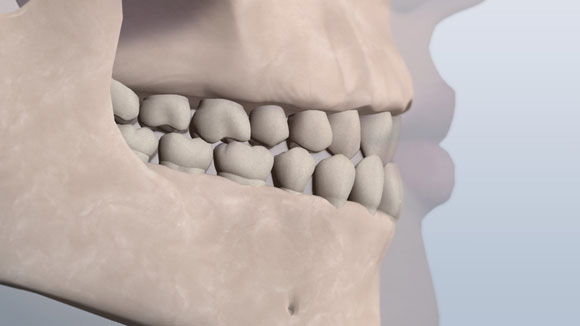
Bites fall into three main categories: Class I, II, and III.
Class I
Class I is a normal, balanced relationship between the upper teeth, lower teeth, and jaws. It can still involve crowding or spacing.
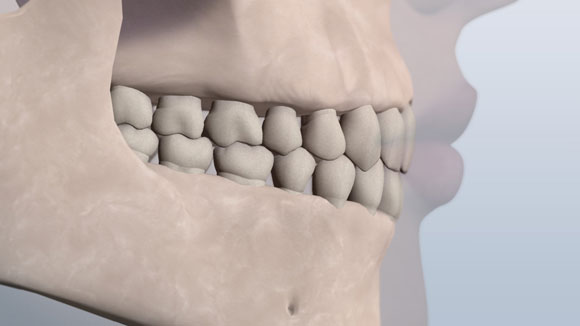
Normal
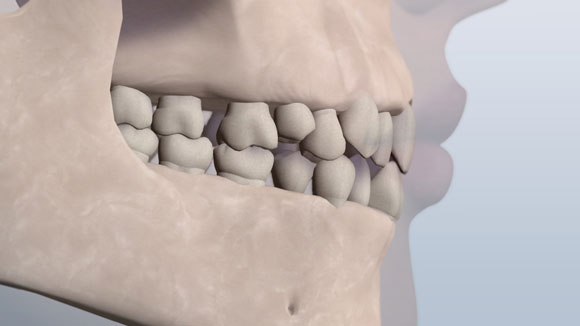
Crowding
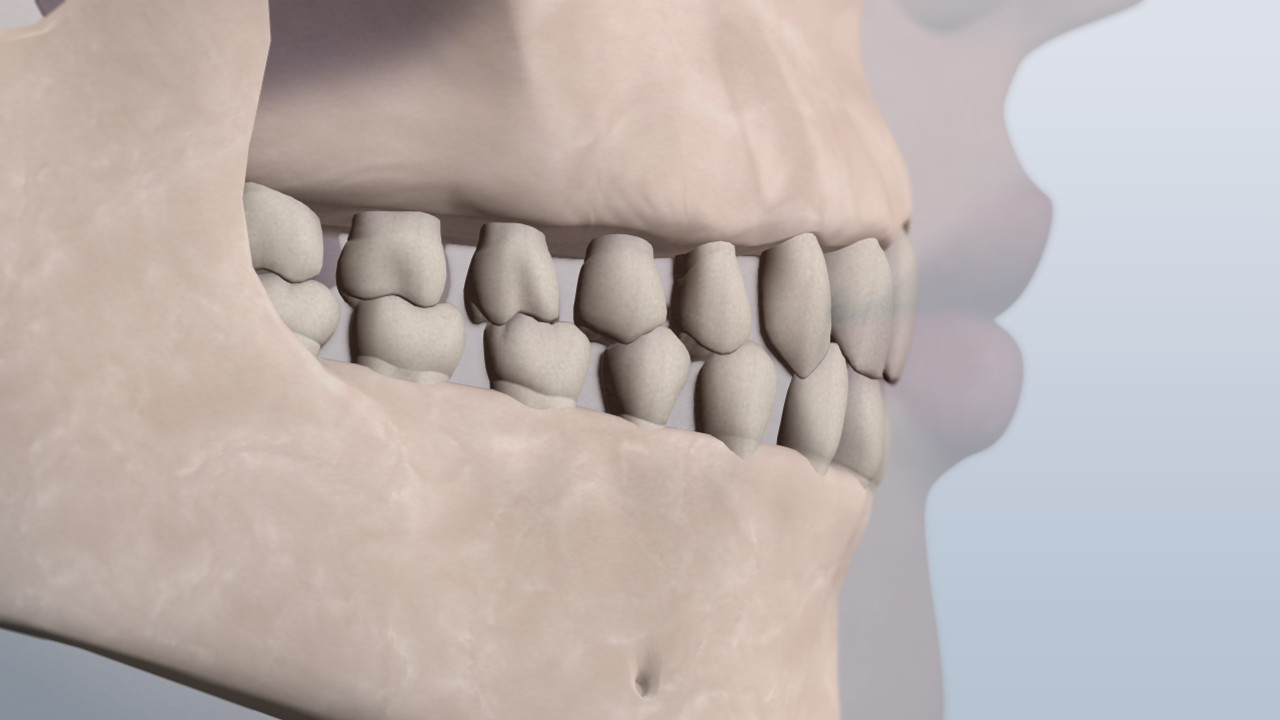
Spacing
Class II
In a Class II bite, the lower first molar sits farther back than the upper first molar. The upper front teeth and jaw project ahead of the lower teeth and jaw, creating a convex profile with a receding chin and lower lip. This can come from an underdeveloped lower jaw, an overdeveloped upper jaw, or both. Class II issues are often inherited and can be aggravated by habits like finger sucking. We treat them by redirecting growth to bring the teeth and jaws into harmony.
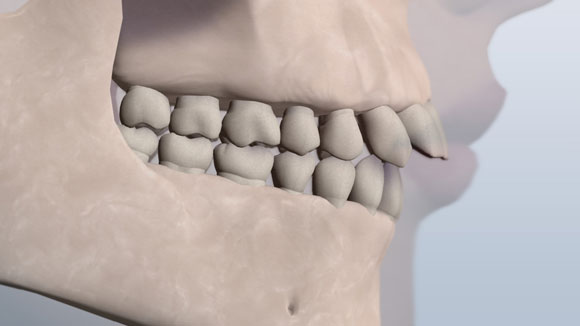
Division 1
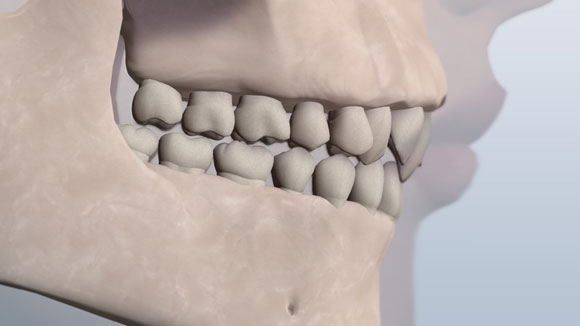
Division 2
Class III
In a Class III bite, the lower first molar sits farther forward than the upper first molar. The lower teeth and jaw project ahead of the upper teeth, creating a concave profile with a prominent chin. It usually stems from an overgrown lower jaw, an undergrown upper jaw, or both, and like Class II, it can be inherited.
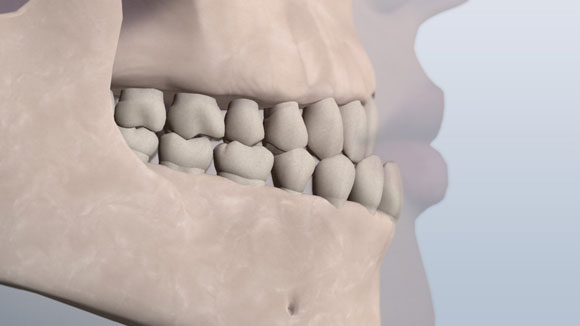
Skeleton